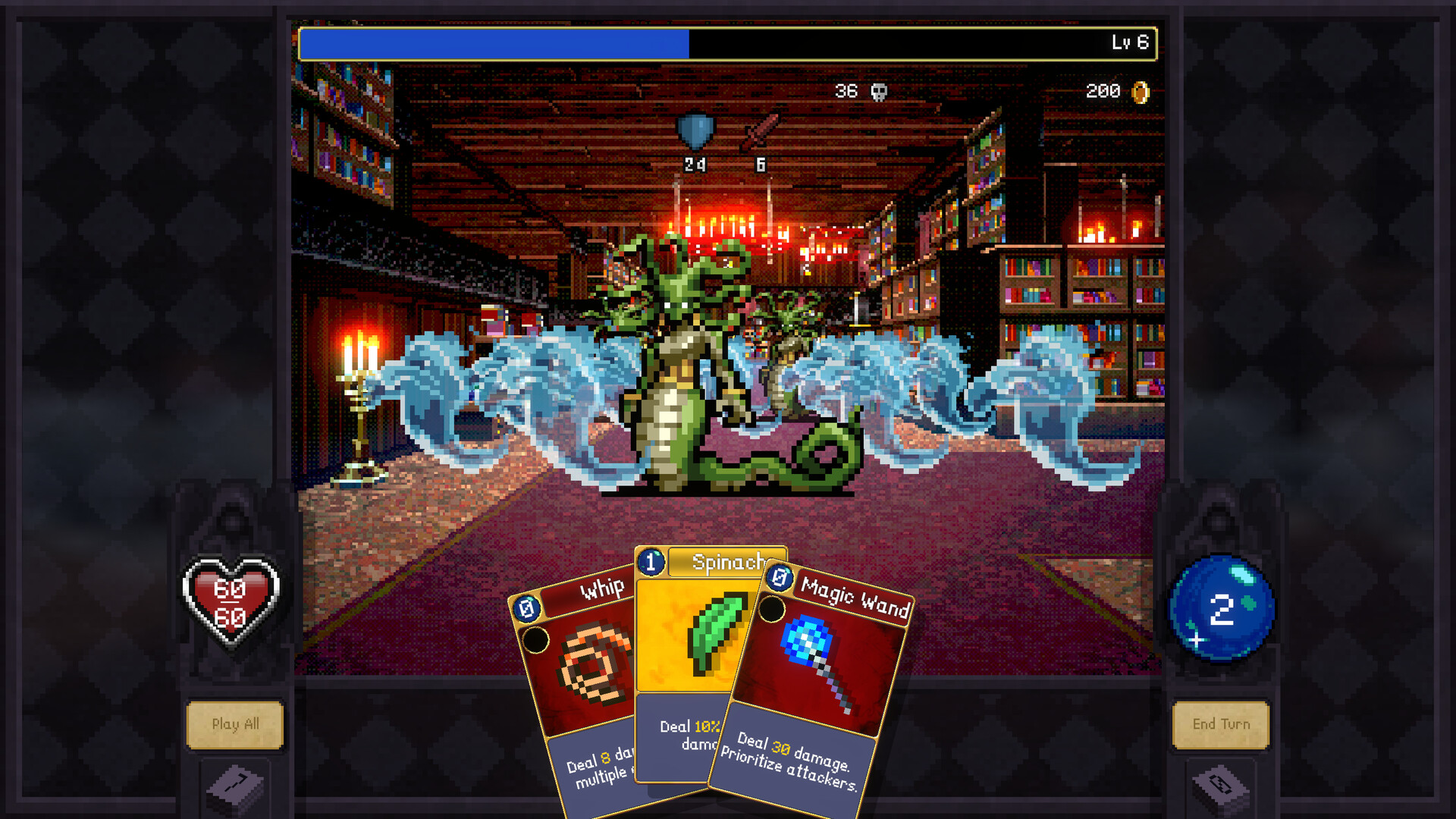
Notas de guía
Route discipline
Route discipline means knowing when the current floor has already done its job. If the deck has a playable opener, one defensive line, and a route to the next boss, another optional room may be riskier than it looks. The best route is often the one that stops before the deck gets polluted.
- Decide what the floor must provide before opening detours.
- Leave when the deck has enough for the next boss check.
- Skip rooms that only improve a best-case hand.
Chest, shrine, and gem rooms
Chests and shrines create big swings, but Vampire Crawlers punishes bad timing. Gem rooms are safer when the build has clear upgrade targets. Chests are better when the deck can absorb a bad card. Shrines are best when the route has health or armor to spend.
- Use gem rooms when upgrade priority is already clear.
- Open chests after the next fight is safe, not before.
- Take shrine risks only when the deck can defend the following turn.
Boss preparation route
The final rooms before a boss should be judged by the fight they prepare. If the boss has shields, search for a shield answer. If the boss floods adds, prioritize control. If the boss has a narrow damage window, preserve burst. Route pages connect those checks to crawlers, cards, and build recipes.
- Read the boss page before spending the last reward.
- Repair the deck before adding another payoff card.
- Enter with health, armor, and a first-turn plan.
Repeatable farming routes
Farming routes work when they have an exit plan. A farm run should become a clear run once the deck has enough burst and defense. Staying too long can turn a strong resource lead into a bloated deck that fails the next elite room.
- Farm after the opener is stable.
- Bank gems for known upgrades.
- Convert to a clear when boss readiness is high.
Common mistakes
- Treating every optional room as mandatory value.
- Using shovel exits too late, after health and draw quality are already damaged.
- Entering boss rooms with rewards but no first-turn answer.


